

You Can Smell It Indoors: Wildfire Smoke Turns Northern Minnesota Sky Orange as Air Quality Alerts Continue
Wildfire Smoke Creates Hazardous Air Quality Across Northern Minnesota
The sky over Duluth and the North Shore has taken on an eerie orange glow as wildfire smoke continues to pour into the region.
According to MPR News, the North Shore is currently experiencing the worst air quality in the country.
Townsquare Media Market President in Duluth, Mary Niemeyer, summed it up perfectly this morning:
"Extremely smoky conditions today on the Northshore. The sun barely peeking through the haze. The smell of smoke from the fires up North is not only strong outside, you can smell it indoors as well. Praying for the safety of our neighbors to the North along with the firefighters!"
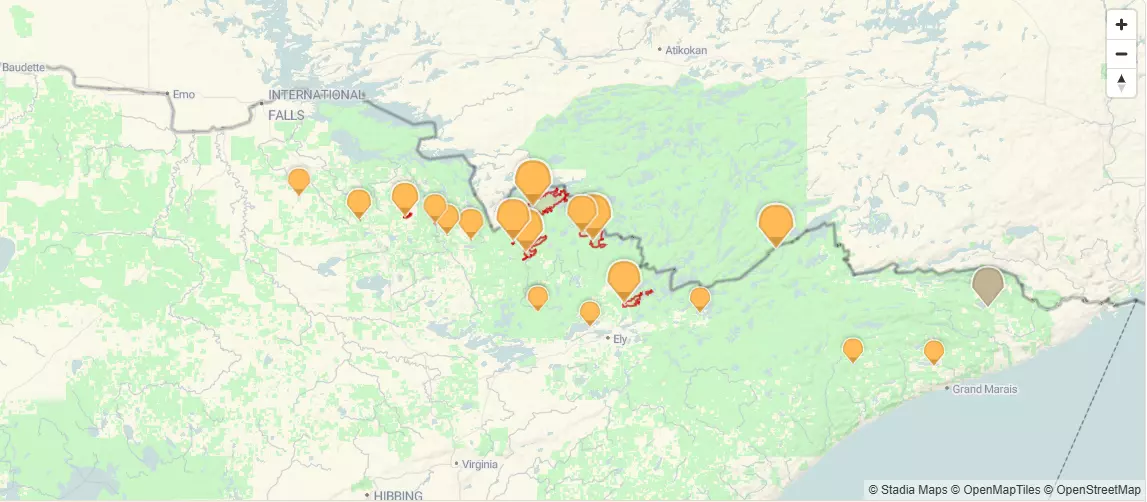
The smoke is coming from 20 ongoing wildfires burning in northeastern Minnesota and Ontario, and it's expected to stick around for at least the next couple of days. So far, about 35,000 acres have burned, which is roughly the size of the city of St. Paul. The Boundary Waters Canoe Area (BWCA) is closed until at least Friday.
How Long Will Wildfire Smoke Last in Minnesota?
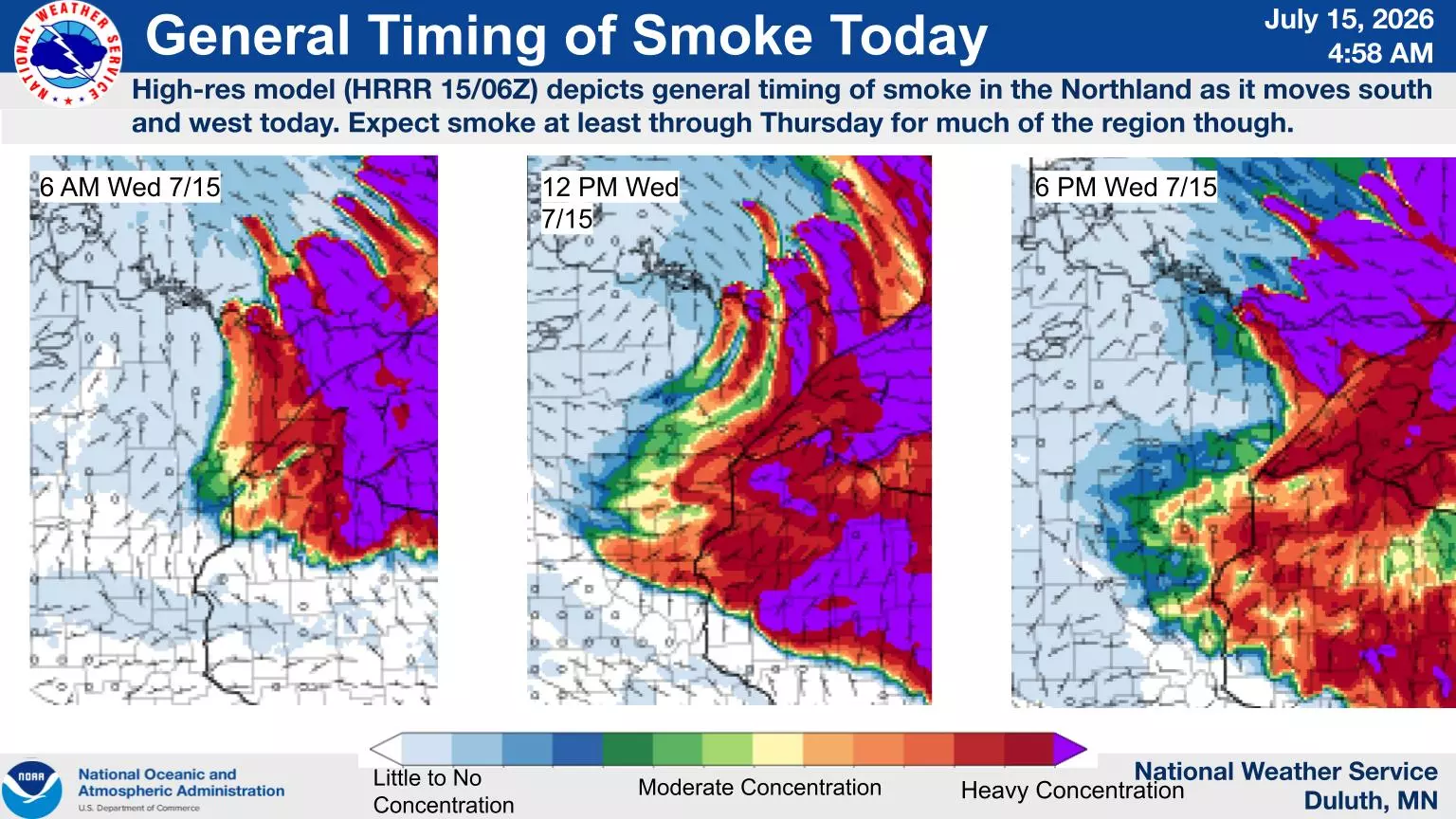
The National Weather Service in Duluth says heavy smoke will continue moving south and west across much of the Northland throughout Wednesday. Unfortunately, smoke is expected to linger across the region through at least Thursday, with some areas seeing poor air quality into Friday.
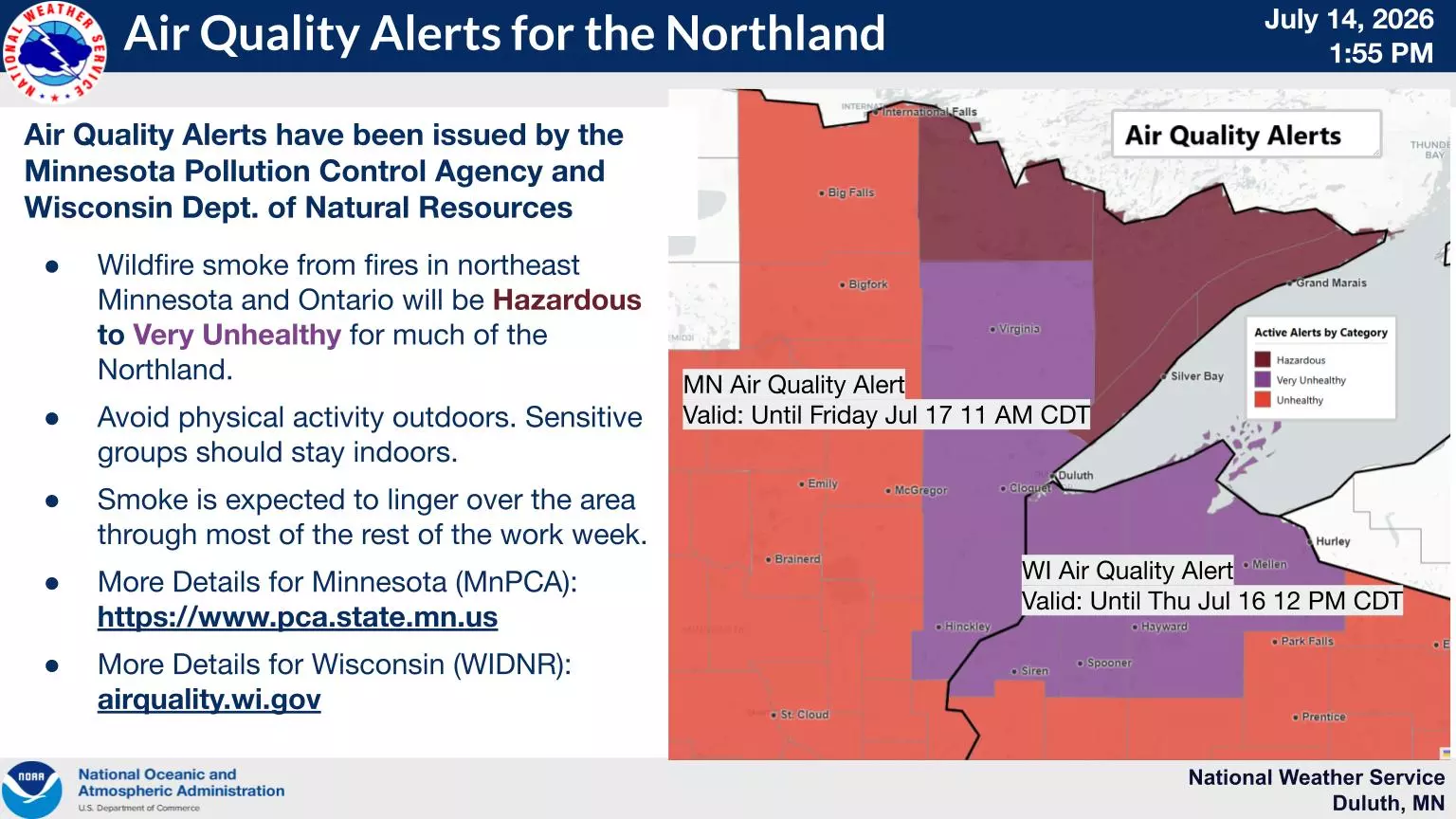
Air Quality Alerts have been issued across much of northern Minnesota and northwestern Wisconsin. Depending on where you are, air quality ranges from unhealthy to very unhealthy, with some areas under hazardous conditions.
Health officials are urging people to limit time outdoors, especially if you have asthma, heart disease, or other respiratory conditions. Even healthy adults may notice irritation in their eyes and throat or experience coughing after spending time outside.
Bruce Wellman from AireServ Heating and Cooling of Northeastern Minnesota says to limit the smoke smell indoors, you can continue running your air conditioner, but make sure your air exchange is turned off, as it brings in outdoor air. Burce says air exchangers shouldn't really be running in the summer at all anyway, because they will bring in the hot, humid air.
For now, experts recommend:
- Keeping windows and doors closed.
- Running air conditioning or air purifiers if possible.
- Limiting strenuous outdoor activities.
- Checking on older adults and anyone with respiratory issues.
- Staying updated on local air quality conditions.
It's been a striking sight across Northern Minnesota today, but it's also important to remember that communities to our north are dealing with the devastating wildfires that are sending this smoke our way.
MPR reports that 17 people have been rescued, with no injuries reported.
READ MORE: Thick Smoke Forces Cancellation of Glenheen, Bayside Sounds Concerts
The Largest Minnesota Wildfires In Modern History
Gallery Credit: Nick Cooper